Comprehensive Eye Exam

If you’ve had a vision screening recently, you might say, “My vision is fine! I don’t need a comprehensive eye exam.”
But a vision screening provides a limited perspective on the overall health of your eyes. It’s a bit like getting your blood pressure checked and not getting the rest of your annual physical. You’ll have useful information, but it’s not the whole picture.
What are the Limitations of a Vision Screening?
Vision screenings only test your ability to see clearly in the distance. This is called visual acuity and is just one factor in your overall vision. Others include color vision, peripheral vision, and depth perception. The screening also doesn’t evaluate how well the eyes focus up close or work together. Most importantly, it doesn’t give any information about the health of the eyes.
Vision screenings are conducted by individuals untrained in eye health.
Vision screenings are offered in many places – schools, health fairs, as part of a work physical, or for a driver’s license. Even if your physician conducts the screening, they are a generalist and only have access to a certain amount of eye health training. Most individuals don’t have the tools or knowledge to give you a complete assessment of your vision or eye health.
Vision screenings use inadequate testing equipment.
In some cases, a vision screening is limited to an eye chart across the room. Even when conducted in a physician's office, they won’t have the extensive testing equipment of an eye doctor. They also won’t be aware of nuances such as room lighting and testing distances, all of which are factors that can affect test results.
What is the difference between a Vision Screening and a Comprehensive Eye Exam?
Vision screenings are meant to detect potential problems that may require a comprehensive eye exam. Vision screenings only test your ability to see clearly at distance. Your distance vision is only one factor of your overall vision. Many eye diseases, such as glaucoma, have little to no early symptoms. For children, they may not know what clear vision is or recognize that there is a problem with their vision. This can impact their overall development as they grow.
What are the Benefits of a Comprehensive Eye Exam?
Comprehensive eye exams evaluate all aspects of your vision and eye health.
The comprehensive eye exam looks at your eye externally and internally for any signs of eye disease, then tests your vision in a variety of ways.
External Exam – This is an evaluation of the whites of your eyes, the iris, pupil, eyelids, and eyelashes.
Internal Exam – This is an evaluation of the retina and optic nerve while your eyes are dilated.
Visual Function and Eye Health – This includes testing depth perception, color vision, peripheral vision, and the response of the pupils to light, as well as an evaluation of eye focusing, eye teaming, and eye movement abilities.
Glaucoma Testing – This is a test of fluid pressure within your eyes to check for the possibility of glaucoma.
Visual Acuity – Your doctor will test your vision with different lenses to determine if glasses or contact lenses can improve your vision.
Comprehensive eye exams look at your total health history.
Your overall health can impact your eye health. Medications, diseases such as diabetes, smoking, and family history can all put your visual health at risk.
Our therapeutic optometrists are trained to detect health problems with our cutting edge technology. The American Optometric Association recommends an eye exam annually, but your eye doctor may recommend more frequent exams based on your individual needs.
What Happens During An Eye Exam?
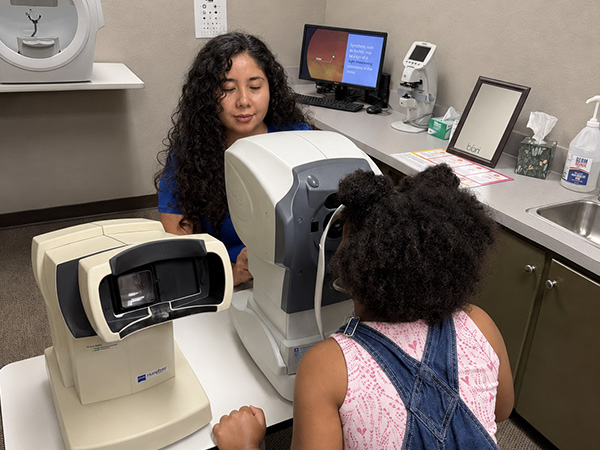
Our doctors will check your vision thoroughly to provide you with an accurate prescription. If you wear eyeglasses or contact lenses, your visual acuity will be assessed both with and without your corrective lenses.
You'll be asked to read from a basic eye chart, which tests your eyesight at various distances. The normal measurement for eyes with no refractive error is 20/20. We'll also use a phoropter to check carefully for astigmatism, nearsightedness, and farsightedness. This procedure involves having you look through a series of lenses, and you'll need to give feedback on which ones give the clearest vision.
We will check your peripheral vision, how your eye muscles move together, and pupillary reaction.
Pictures of the inside of your eyes will be taken using the latest in wide-field retinal imaging. This will give us an idea of the overall condition of the back of your eye, and your optometrist may require dilation may be needed for a more in depth evaluation.
A digital image of the macula, the very center of your vision, will be taken to check for early signs of macular degeneration. The same will be taken of your optic nerve to detect signs of early glaucoma.
The results of your comprehensive exam will be explained, and your doctor will give you a recommendation on prescriptions, treatment plan, and next steps on how to maintain good ocular health!

Comprehensive eye exams look at your total health history.
Even though you visit a separate office for your eye health, that doesn’t mean your eyes shouldn’t be treated holistically. Your eye doctor will discuss your overall health and that of your immediate family, any medications you’re taking, and whether you have high blood pressure or diabetes. They’ll also want to know if you smoke and how much sun exposure you get. All these factors help the eye doctor properly assess your eye health.
The American Optometric Association recommends an eye exam annually. Your eye doctor may recommend more frequent exams based on your individual needs.
Quick Links
All Eye Care Services
Find personalized eye care excellence with our comprehensive services. From eye exams to advanced diagnostics, trust us for all your vision needs.
Keep In Touch
For non-urgent questions or to learn more about our services, contact us today!
© 2026 Whitney Family Eyecare. All rights Reserved - Accessibility Statement - Privacy Policy - Sitemap
Managed and Designed by 